

Ethan Wu used to work the front desk at a dental office. One day, in the back corner of a desk drawer, he found an old sticky note that said to call a patient back. He asked the dentist if it was urgent. She wasn't sure. Nobody knew if that patient ever came back.
That is how Ethan opened Design Review 1 on November 11, and it is a good summary of the night. At Problem Day in October, Cohort 13 showed us the problems they picked. This time each team had to show what it learned since. Who has the problem, who would pay to fix it, what people do about it today, and the smallest thing they could build to test their idea. Mentors and the audience gave every team feedback on what was working and where to take it next.
Here is what six of them presented.
Relay
Making sure the patient comes back
When a dentist sends a patient to an oral surgeon for an implant, the patient is supposed to come back to the dentist about four months later to finish the job. Nobody's job is to make sure that happens. Some patients never return, their treatment stays unfinished, and the dentist loses the revenue.
Ethan has talked to a dentist, an oral surgeon, and the surgeon's office administrator. The surgeon asked for the tool himself and said the dentist shouldn't be the one paying for it. The day after Ethan's interview, the dentist started her own spreadsheet to track these patients and logged nine referrals in under two weeks. Nobody asked her to.
Relay closes that loop. It runs from the specialist's office, which is the one place that knows when a patient is ready to go back. The moment treatment is done, the dentist hears about it. When the patient is ready, they get a text to book with their dentist, and a reminder if they haven't. Nobody has to remember, and nobody has to change how they already work. Each month, both offices see how many patients made it all the way through.
Ethan sees it working for any specialist and any dentist who send patients to each other, a safety net under every referral so no one's care stops halfway. Meet Relay
SignalShift
Finding the alert that matters
A nurse on an inpatient unit gets alerts from the bedside monitors, from the EMR, and from the shift handoff, and none of those talk to each other. The nurse ends up being the filter. In one study SignalShift cited, 88% of 65.6 million monitor alarms were technical problems, not changes in the patient.
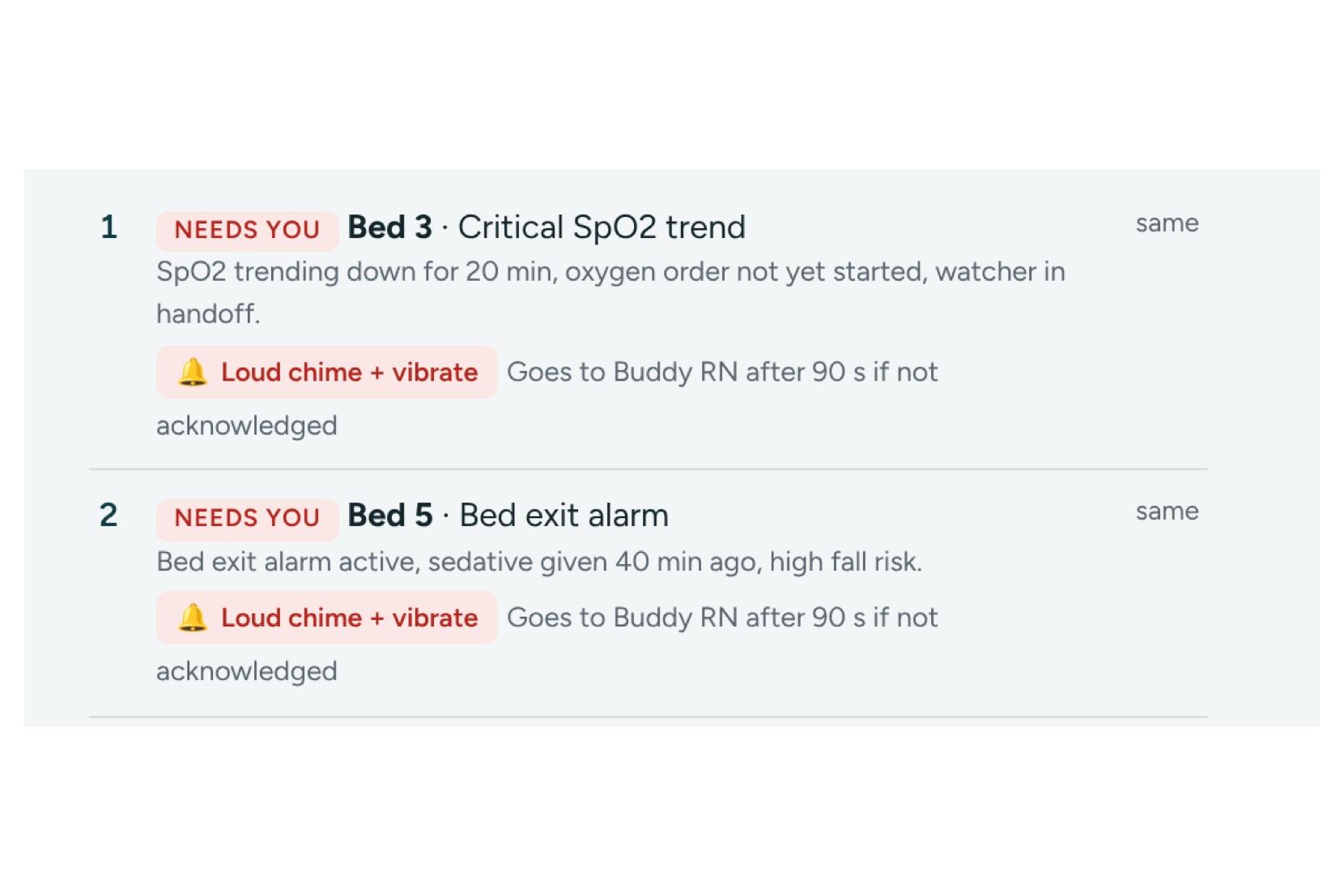
Manish Verma and his team built a prototype that reads all three sources together and gives the nurse one ranked list, with the reason each item is there. It only reads data and never writes to the chart. On 100,000 synthetic events they generated (24 beds, five nights), it cut 4,805 alerts down to 94 and still caught all 34 urgent events and all 17 quiet declines that set off no alarm. The team is careful to say that is not clinical validation. Next, by December 31, at least five nurses and charge nurses will run through test scenarios. The goal is for them to find the urgent patient in under 60 seconds. Meet SignalShift
MHABI
Who is most burdened, not who is next
Most mental health waitlists go by one thing, how long you've been waiting. Khutaija Noor showed two patients who have both waited 60 days. One is low risk with a lot of support at home. The other is at high risk of suicide, has been to the ER before, and is out of work. On a waitlist, they look the same.
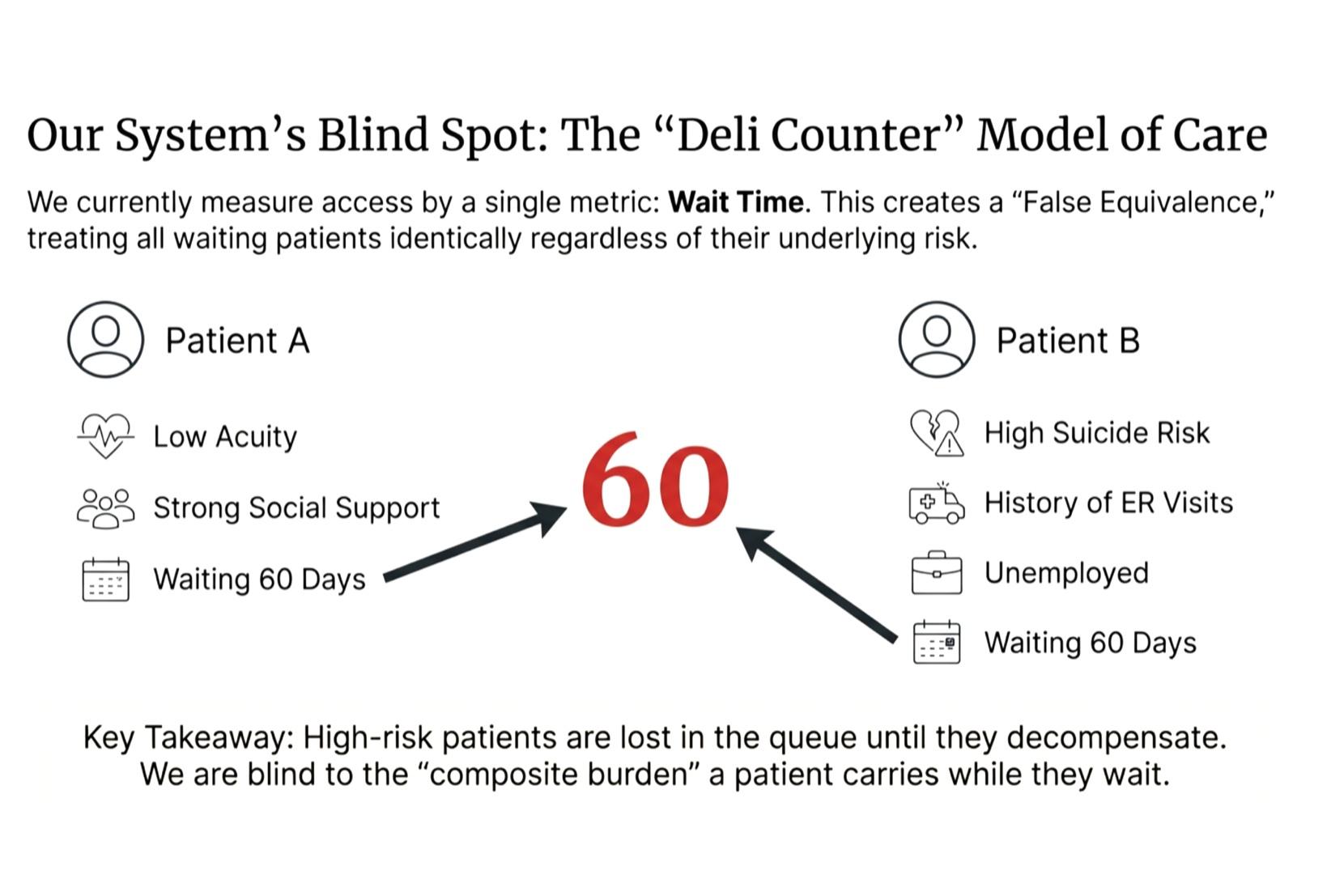
Khutaija and Mohammed Zaid Shaik built the Mental Health Access Burden Index to tell them apart. The front desk does a short intake, and the patient gets a score from 0 to 100 based on five things, including wait time, how severe the illness is, and how much it is hurting their work and life. Suicide risk can override the rest. They also showed why speed matters. In a study of outpatient substance use treatment, missed appointments went from 12% when the appointment was the same day as the first call to 42% when it was a week out. MHABI is patent pending and has been presented at the American and European Psychiatric Associations. Meet MHABI
ColoStim
Putting the needle in the right place
Slow-transit constipation affects somewhere between 6.7 and 13.4 million people in the US, and laxatives don't fix the underlying problem, which is a colon that doesn't move well. One treatment uses thin needles in the abdominal wall to deliver a small electrical current, and the pulse generators cost about $130. The hard parts are getting the needle to the right depth and knowing if the treatment is working.
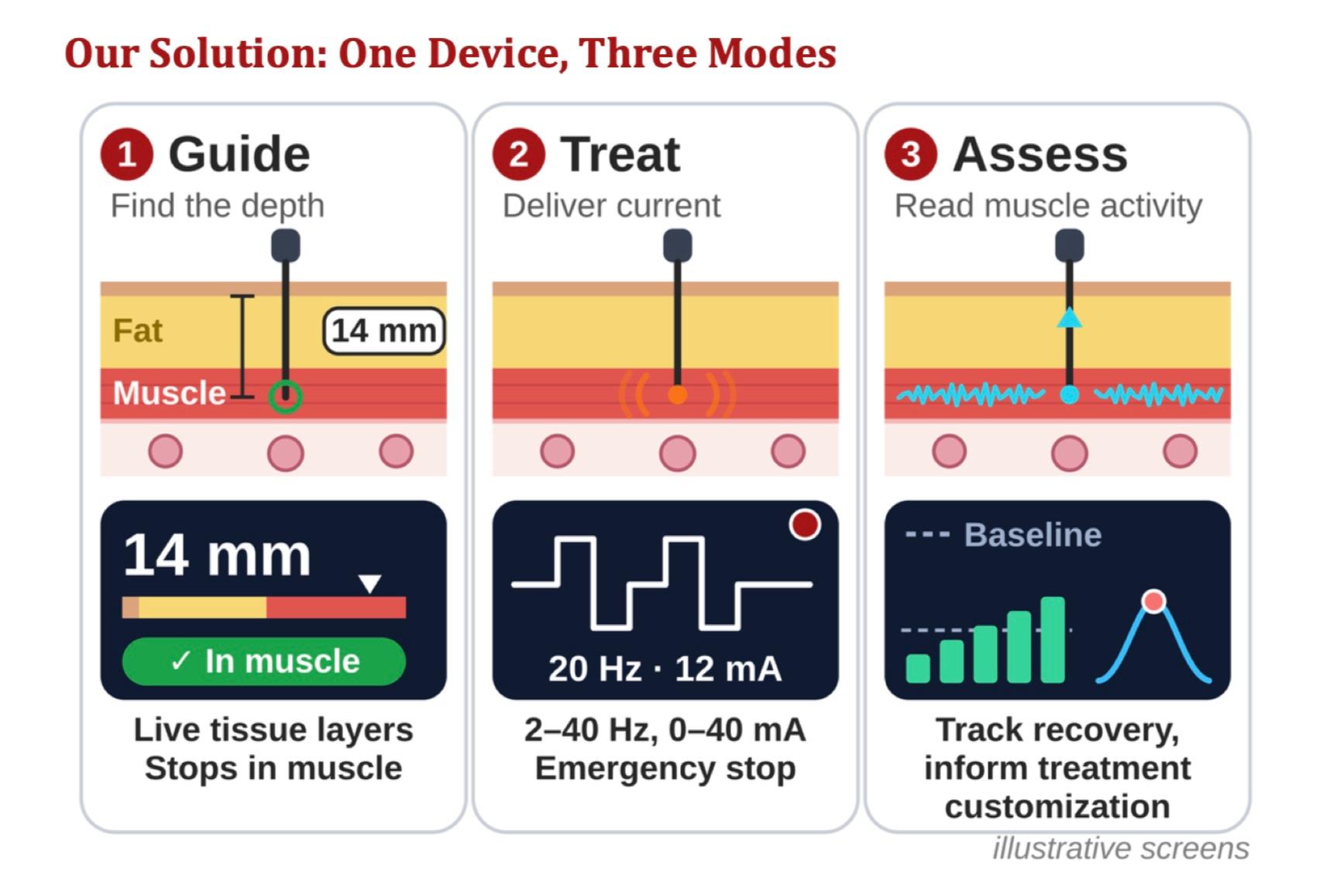
Gabriela Hakeman, Heather Sutkus, and Claire Anderson want one device that does all three. It shows the tissue layers as the needle goes in so it stops in muscle, delivers the current with an emergency stop, and reads muscle activity afterward so a clinician can see if the patient is getting better. They are working with Linda Wu, Joseph Klaesner, and Tina Anderson. Meet ColoStim
MedIQ Health
An inhaler that reports back
Asthma patients don't see their doctors often, and a lot happens between visits that never gets recorded. MedIQ Health's InhalAIR clips onto a regular inhaler. A pressure sensor measures how hard the patient breathes in, an accelerometer checks that they shook the inhaler, and a microphone checks that the medicine actually came out.

In their first tests, the pressure readings lined up with airflow almost perfectly (an R squared of 0.99). The data goes to Polly, their app, which is already on the App Store as a symptom and medication log. Mira Srinivasa presented for a team of four Rice bioengineering students that already has a provisional patent, more than $43,000 in funding, and partner clinics in Houston. They are looking for engineers and for people who know clinical trials and FDA approval, and they want to start working in St. Louis. Meet MedIQ Health
Brainject
Seeing psychosis before it arrives
One in four young people at high risk for psychosis develop it within three years, and treatment usually starts only after the first episode. Danting Zeng and Arushi Mohite want to catch the change earlier by comparing a patient's brain recordings to their own past recordings at every visit, not just to everyone else's.
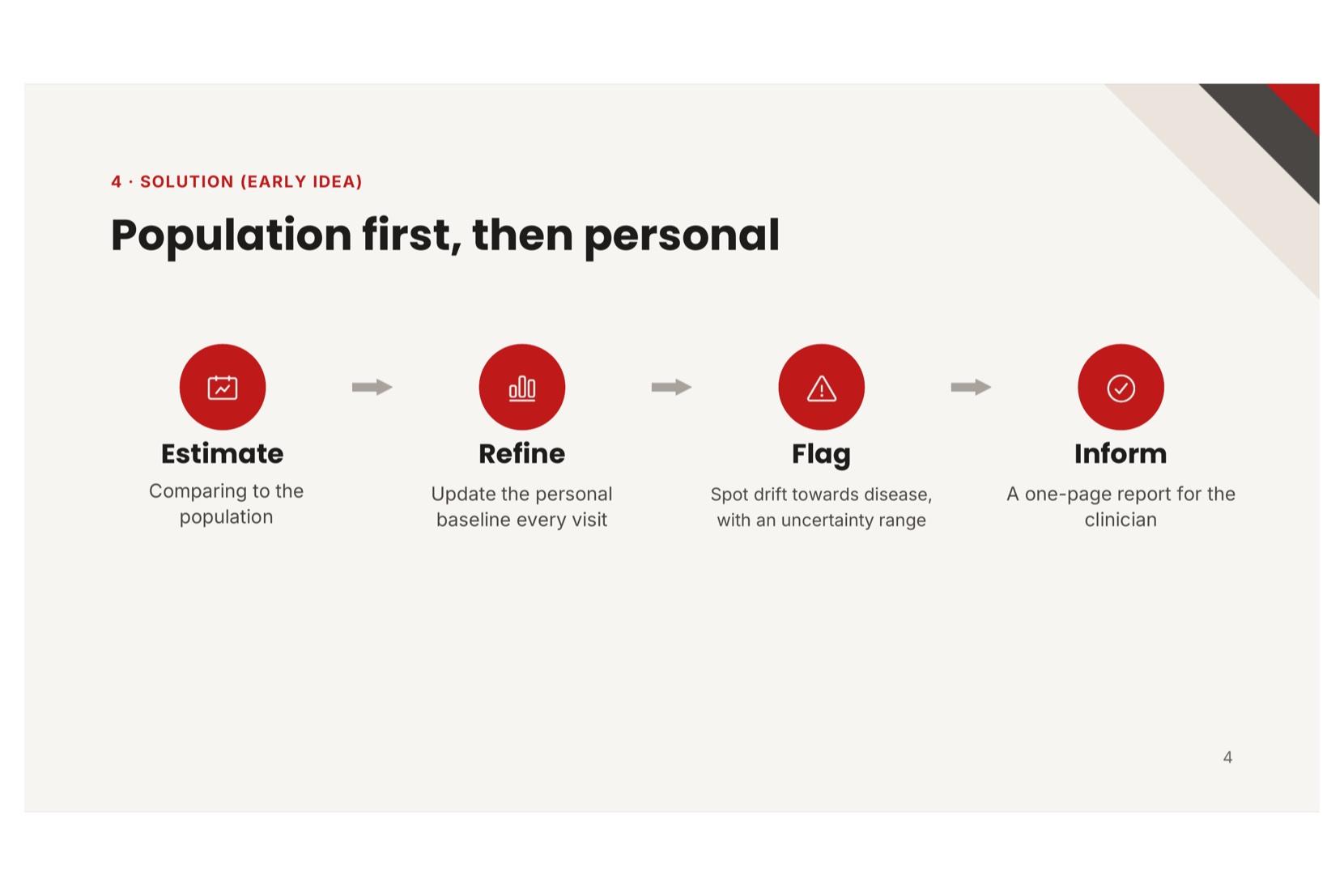
Their early results come from EEG. Their model matched 65% of 77 people to their own recording from a few minutes earlier, where guessing would get 1.3%. On 31 patients, it put pairs in the right order of symptom severity 63% of the time, compared with 51% using only age, sex, and medications. They know what they are missing. They need an early-psychosis psychiatrist, a faculty member to help them work with a large psychosis research dataset called AMP SCZ, and a business lead. Meet Brainject
Come to the next one
Almost every team ended with an ask. SignalShift is looking for charge nurses to try their prototype. Brainject is looking for a psychiatrist who works with early psychosis. MedIQ wants people who know clinical trials and regulation, and Relay wants someone to help build the software. If one of those sounds like you, this is your chance.
The teams present again at Design Review 2 on January 20, and anyone can RSVP.
Want to mentor? Come hear where the teams are now and tell them what you think. Sign up as a mentor.
Want to join a team or work on a startup? Several of these teams are still filling roles, from engineering to clinical to business. Come meet them and see what they are building.
Curious about Sling Health? Design Review 2 is the best way to see what a year here looks like. Then find out how to get involved.