
Our chief medical officer, Max Bagga, is the central example in a U.S. News & World Report feature on what premeds should know about AI in healthcare. Max talked about Sling Health in his interview, and the published piece, which ran October 6 in the Medical School Admissions Doctor column by Rachel Rizal, MD, centers on his own path from math to medicine. Read it at U.S. News
From math to the clinic
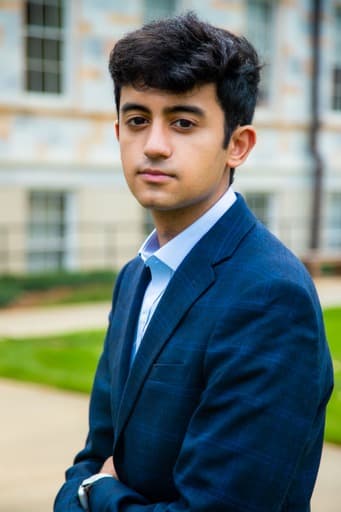
The feature follows Max from Emory, where he built machine learning models on questions like the role pigs played in the 2009 swine flu pandemic and whether an ECG can predict cardiovascular risk, to a Fulbright in India. There he worked with Raxa Health on a platform that lets a doctor in a rural, underserved area deliver care with nothing more than a smartphone.
Now a second-year medical student at WashU Medicine, he applies AI to drug development, drug-induced liver injury prediction, and clinical decision support.
Start with the problem
His advice to students is the idea Sling Health is built on.
"People love solutions. However, what is more important is finding a problem."
The article has him telling premeds to look for an inefficiency in the hospital where they already volunteer, then ask what a computer could change about it. He points them to coding tools like Claude Code and OpenAI Codex, which let anyone build software by describing what they want in plain language.
The piece names three places to start, precision medicine, medical imaging, and clinical decision support. On the last one, Max argues for privacy first, with models small enough to run on phones and wearables so a patient's data never leaves the device. That is the approach he takes at Raxa.
Why it matters here
Every Sling Health team starts the same way. Someone brings an unmet need, and a team sets out to build a company around it. Nine teams showed theirs at Problem Day on October 14. If the feature makes you want to try, get involved or send us a problem.