
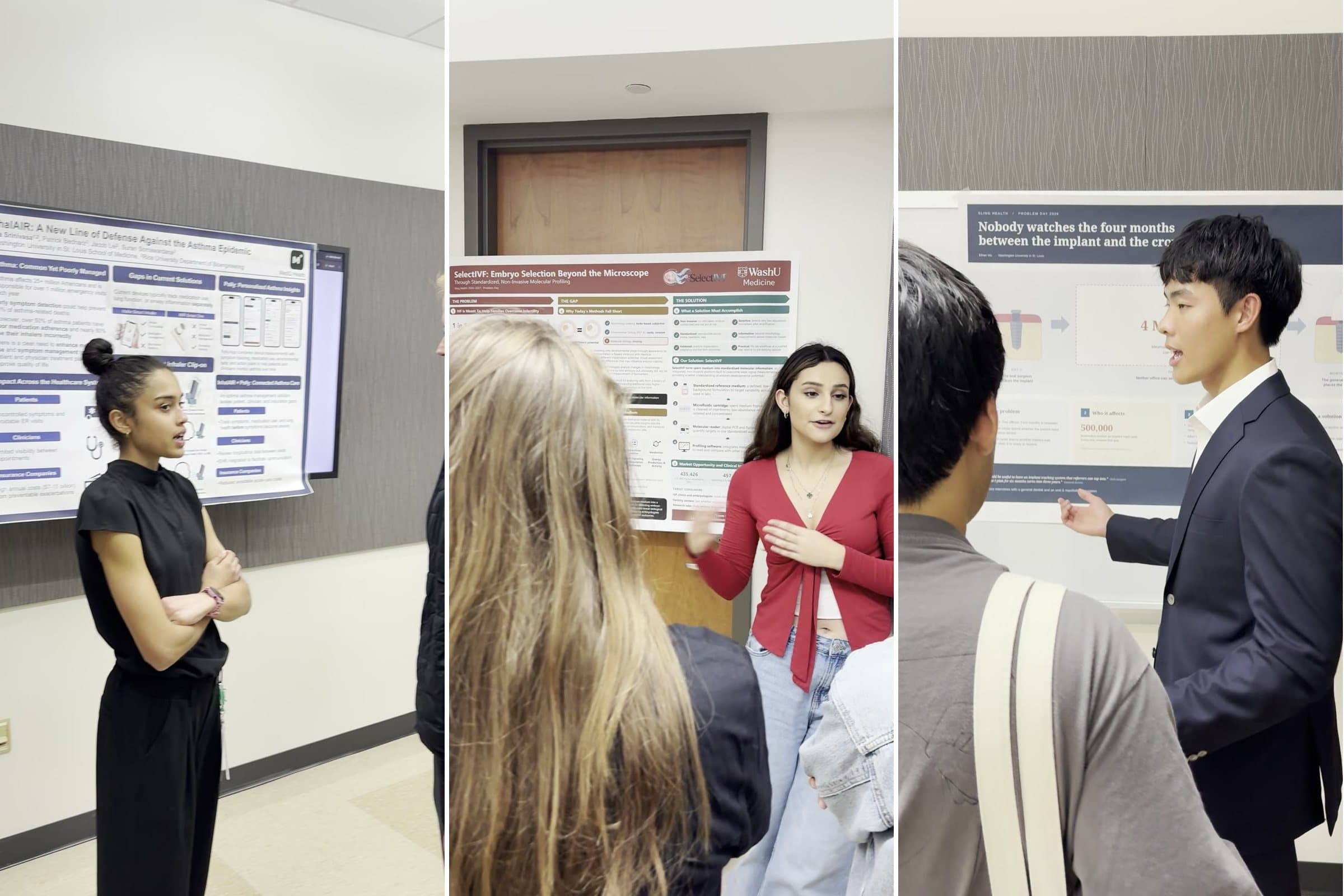
On Wednesday, October 14, more than 50 people filled the FLTC at WashU Medicine for Problem Day. Nine teams stood beside their posters for an hour and a half and walked anyone who stopped through the problem they plan to spend the year solving. Mentors, students, and clinicians moved from poster to poster asking the questions a team needs to hear early.
- people at the FLTC on a Wednesday night
- 50+
- people at the FLTC on a Wednesday night
- teams, each with a poster and a problem
- 9
- teams, each with a poster and a problem
- minutes of walkthroughs and questions
- 90
- minutes of walkthroughs and questions
Every Sling Health company starts this way, with a need someone has seen up close and a team willing to take it on. Here is what each of the nine brought.
Brainject
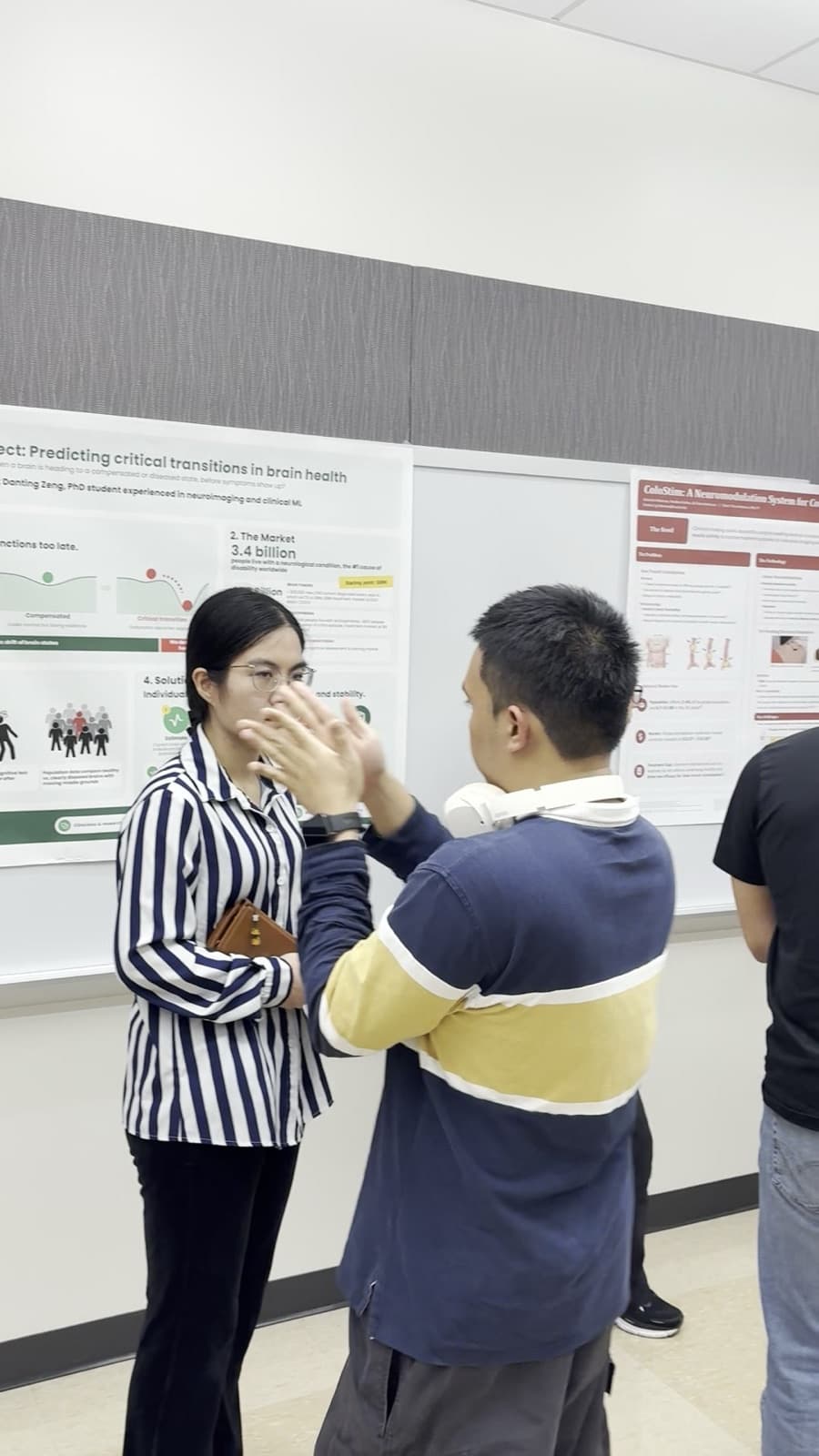
Predicting critical transitions in brain health
A brain can keep a person functioning normally while it quietly loses the ability to compensate for disease. By the time anything looks wrong, the window to act early has passed.
Led by Danting Zeng, Brainject wants to catch that vulnerability first. The team applies population models to imaging, EEG, cognitive, and clinical data to estimate the state of one person's brain, then sharpens the estimate over time with individual monitoring. Meet Brainject
ColoStim
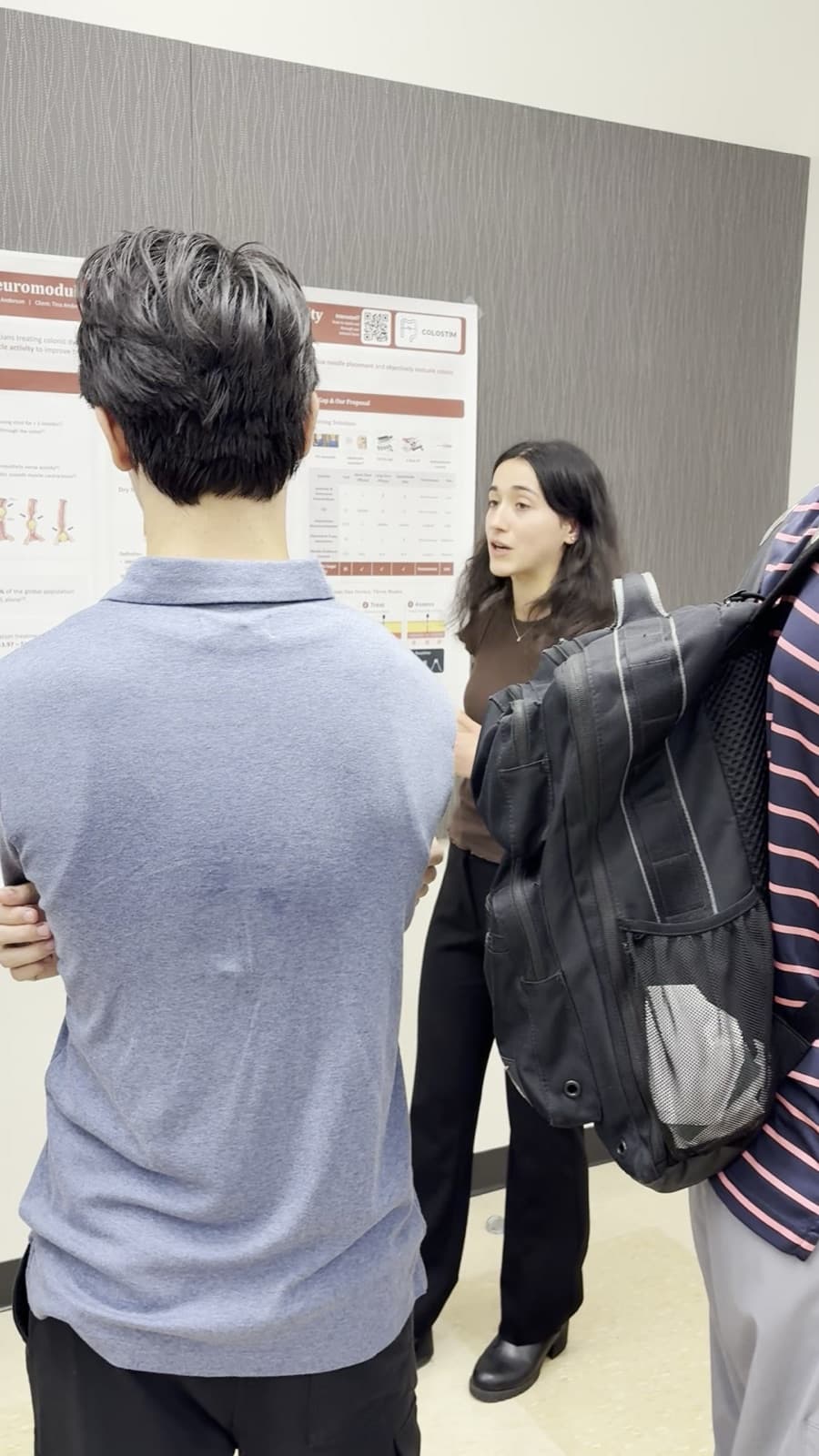
Slow-transit constipation affects an estimated 2 to 4 percent of people worldwide, between 6.7 and 13.4 million in the US alone. Laxatives treat the symptom and leave the colonic dysmotility underneath it untouched.
Clinicians already treat it with dry needling electrical stimulation, but needle placement varies and there is no objective way to see whether the muscle is responding. Led by Gabriela Hakeman with Heather Sutkus and Claire Anderson, ColoStim is one portable device that guides the needle, delivers the stimulation, and measures muscle activity, so every session produces data the next one can use. Meet ColoStim
MedIQ Health
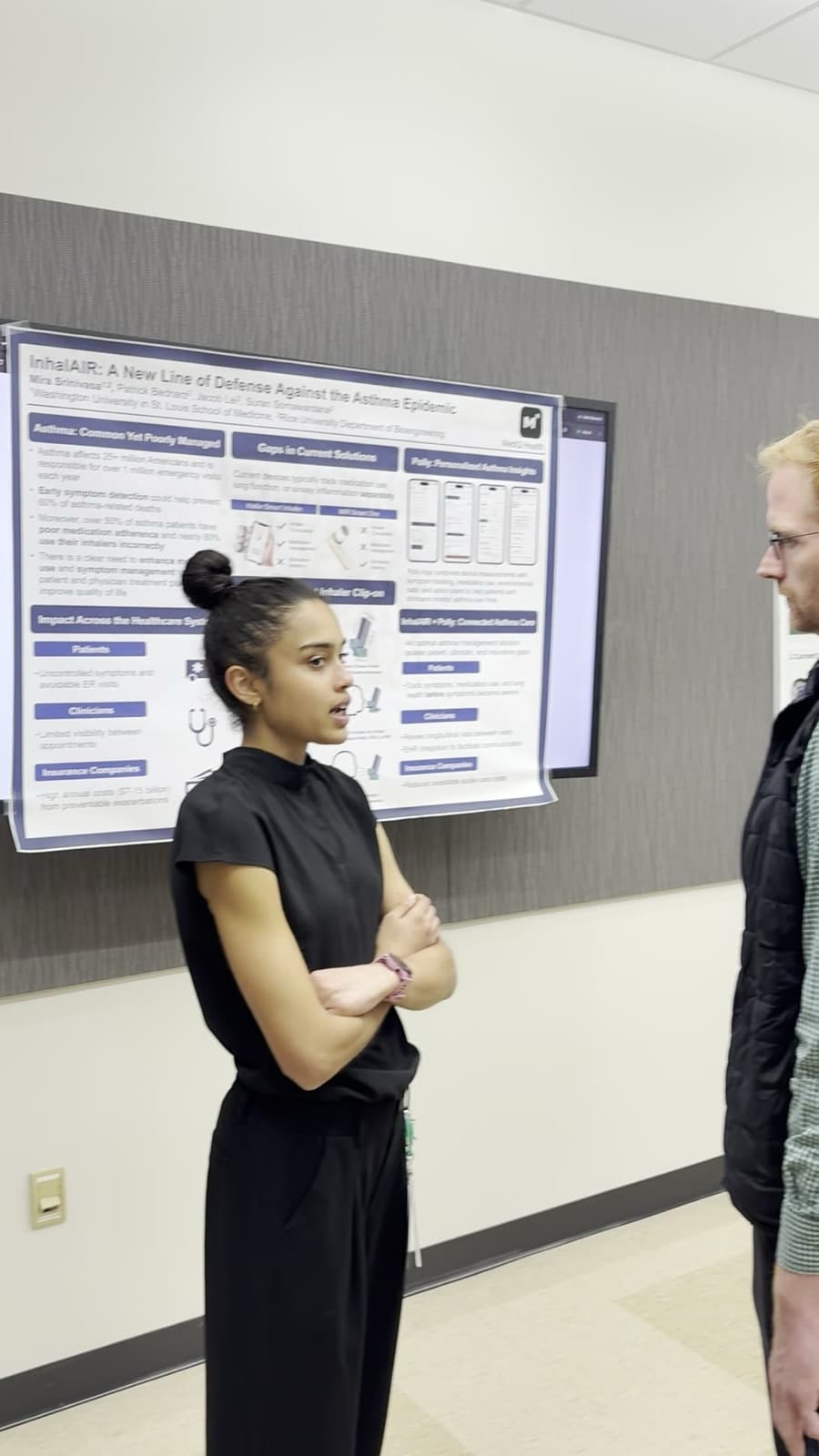
InhalAIR, a new line of defense against the asthma epidemic
Nearly 25 million Americans live with asthma, and most of their care still happens after an attack instead of before one. Between visits, nobody has a clear read on lung function, airway inflammation, or whether the inhaler is being used at all.
Led by Mira Srinivasa, MedIQ Health is building a clip that fits onto an inhaler and pairs with a phone. It tracks pulmonary function, inflammation, and adherence, and uses that record to predict an exacerbation before it arrives. Meet MedIQ Health
MHABI
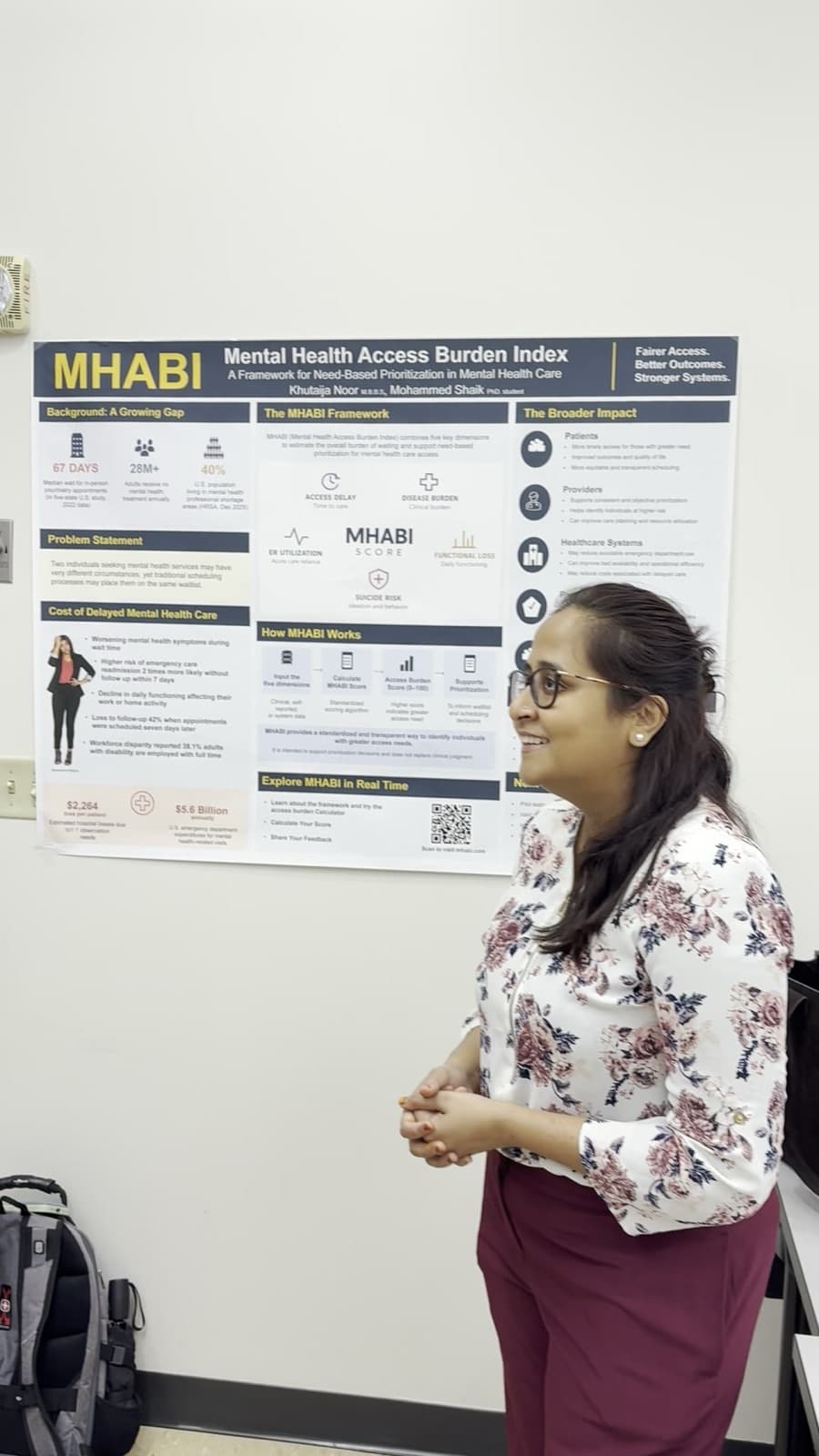
The Mental Health Access Burden Index
Two people looking for mental health care can be in completely different situations and still land on the same waitlist, in the same order, with the same wait.
Led by Khutaija Noor, MHABI is building a framework that ranks people by need instead of by when they called. The poster put the goal in six words. Fairer access, better outcomes, stronger systems. Meet MHABI
NF1 Pediatric Project
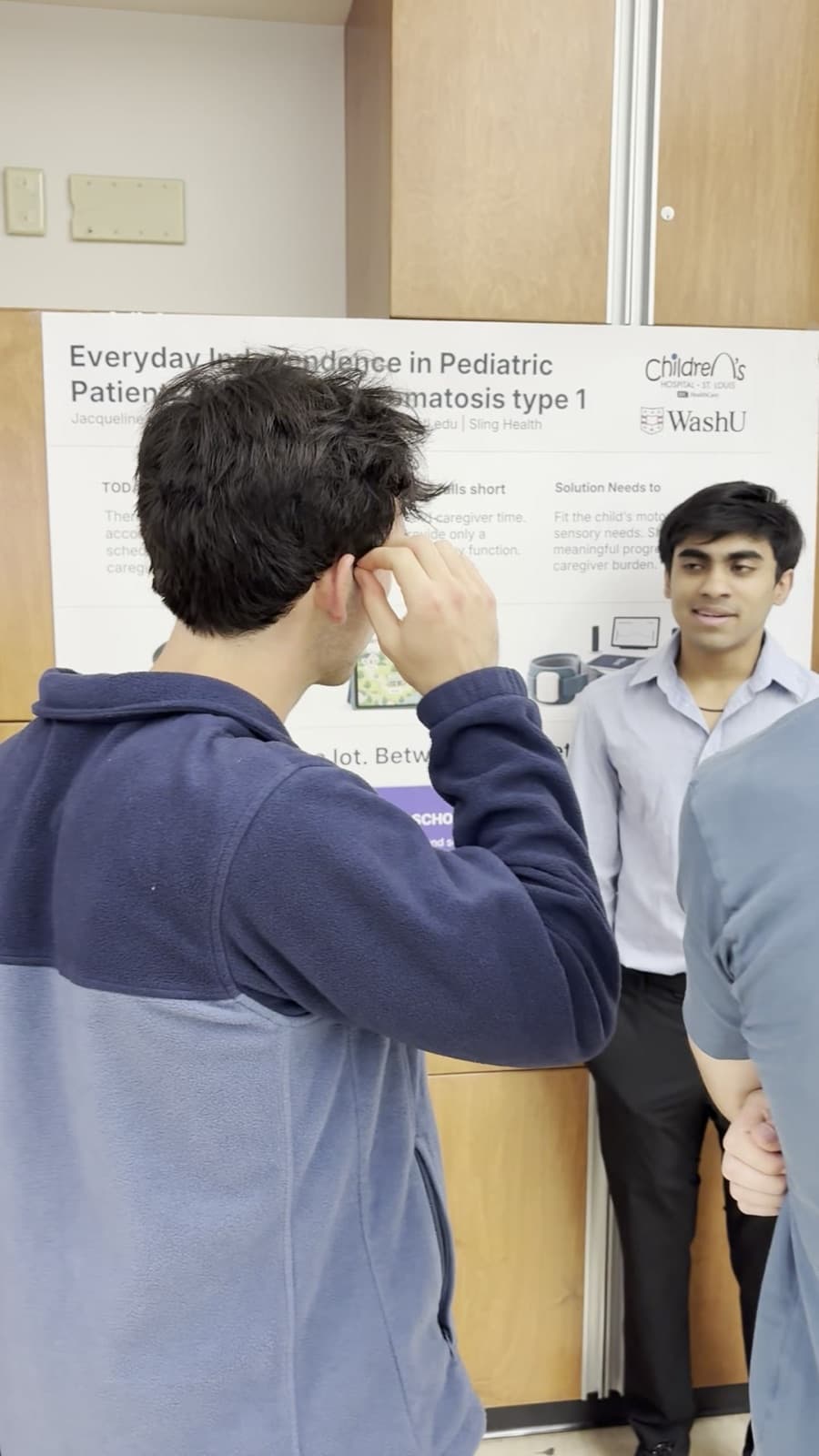
Everyday independence in pediatric patients with neurofibromatosis type 1
About half of people with NF1 have learning difficulties, and trouble with planning, movement, and sensory processing makes a morning routine, a school day, or a game at recess harder than it should be.
Co-led by Gaurish Agrawal and Jacqueline Chuang, and working with the NF1 Center at WashU Medicine and St. Louis Children's Hospital, the team is testing three ideas. A device that walks a child through a routine one step at a time, a portable gait assessment kit for clinic visits, and an iPad game for practicing everyday skills. Meet the NF1 Pediatric Project
Relay
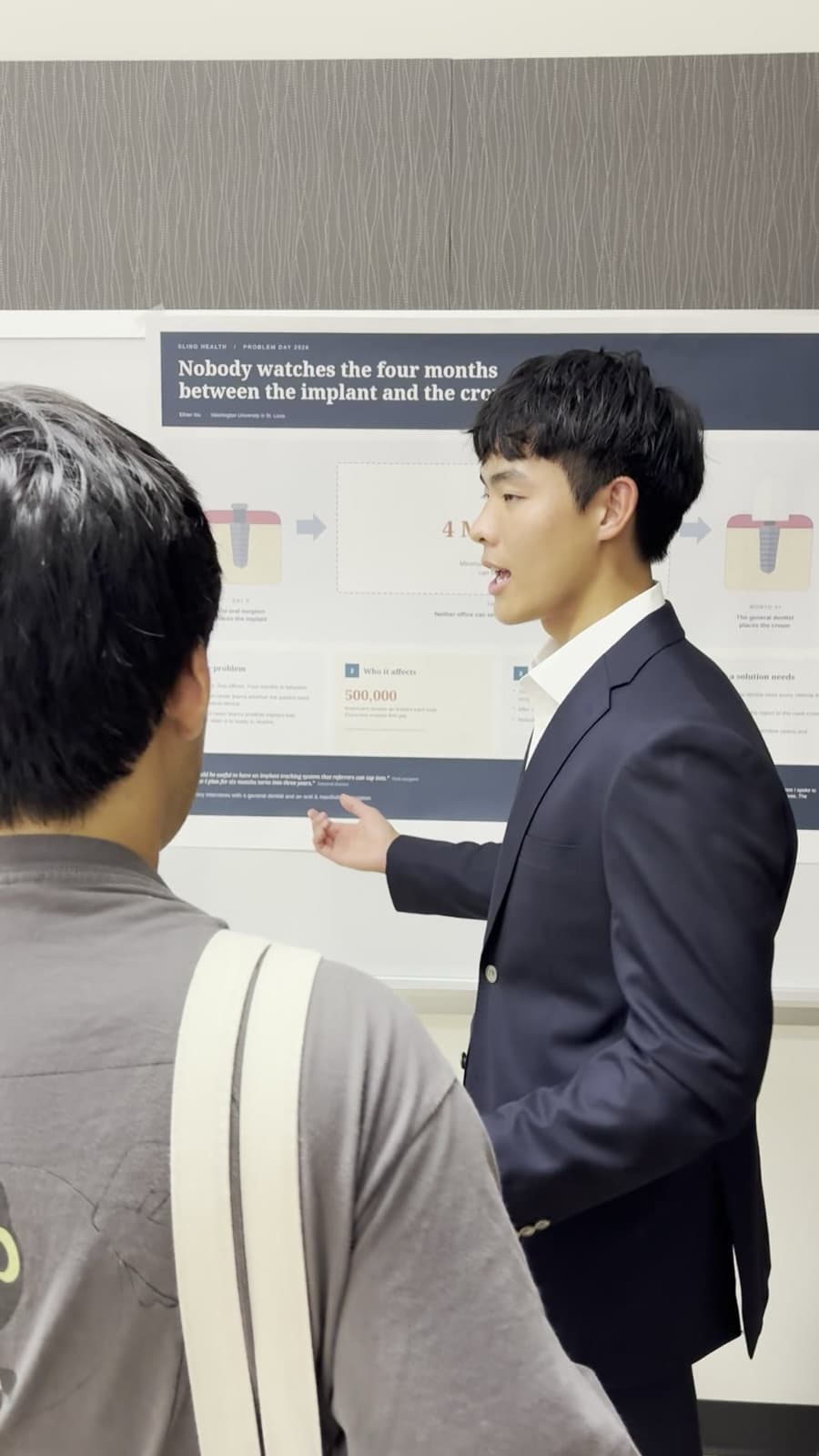
Nobody watches the four months between the implant and the crown
About 500,000 Americans get a dental implant every year, and each of them spends at least four months between two offices that cannot see each other's work. When the handoff slips, the patient has had surgery and still has no tooth.
Led by Ethan Wu of Olin Business School, Relay gives the referring dentist and the specialist one shared case. The specialist posts the report and the expected restoration date, and the dentist sees every patient they referred out in one place, with a flag on any case that is ready and stalled. Relay is still recruiting a clinical co-lead and a technical teammate. Meet Relay
SelectIVF
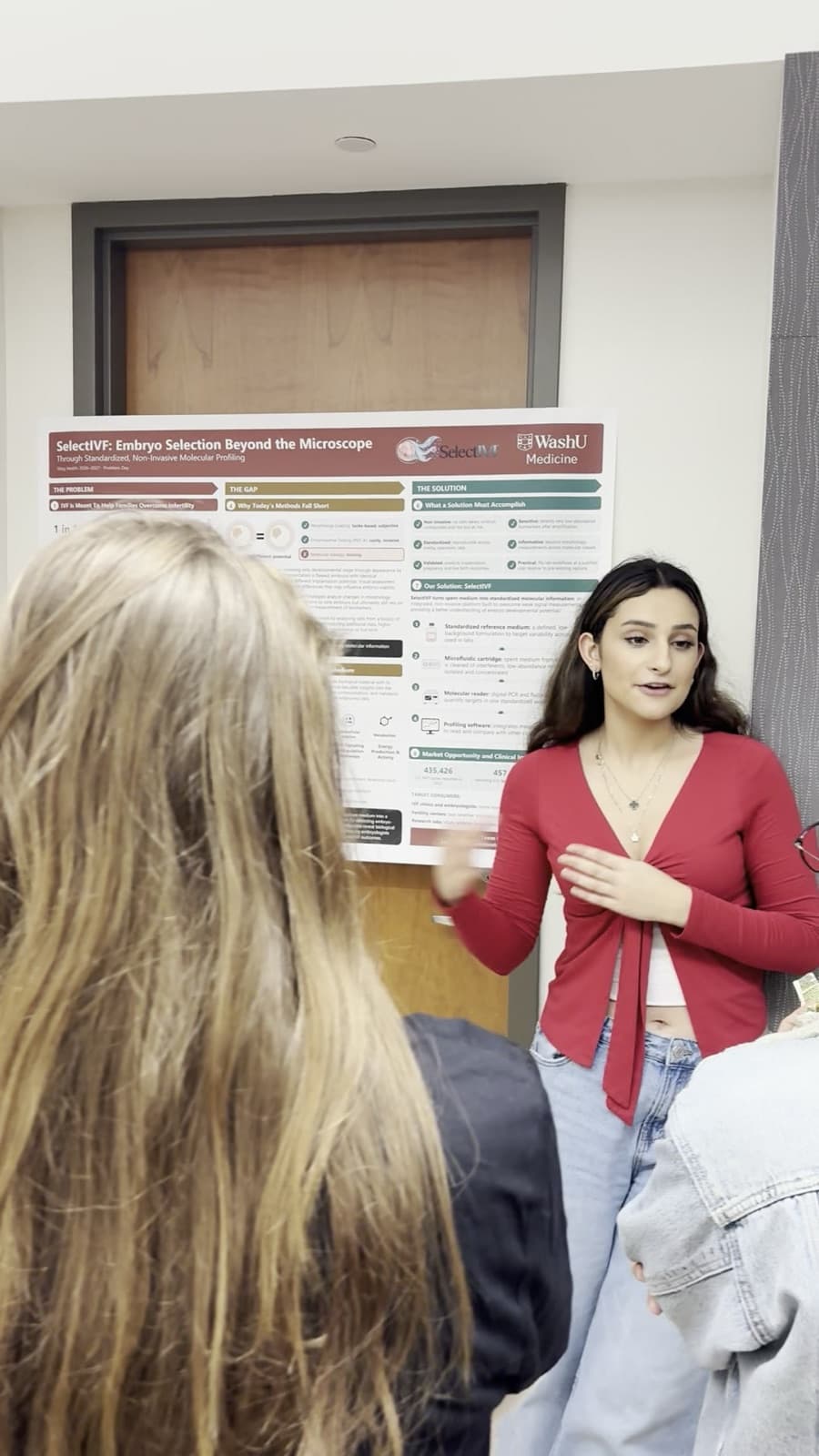
Embryo selection beyond the microscope
Embryologists mostly choose which embryo to transfer by how it looks, and embryos that look almost identical can have very different odds of implanting. The culture medium they grow in carries molecular clues, but at concentrations too low for any standard test to read.
Led by Arya Waza, SelectIVF is building a non-invasive platform that turns medium clinics already throw away into molecular information, combining a low-background reference medium, microfluidic isolation, sensitive detection, and analysis software. Meet SelectIVF
SignalShift
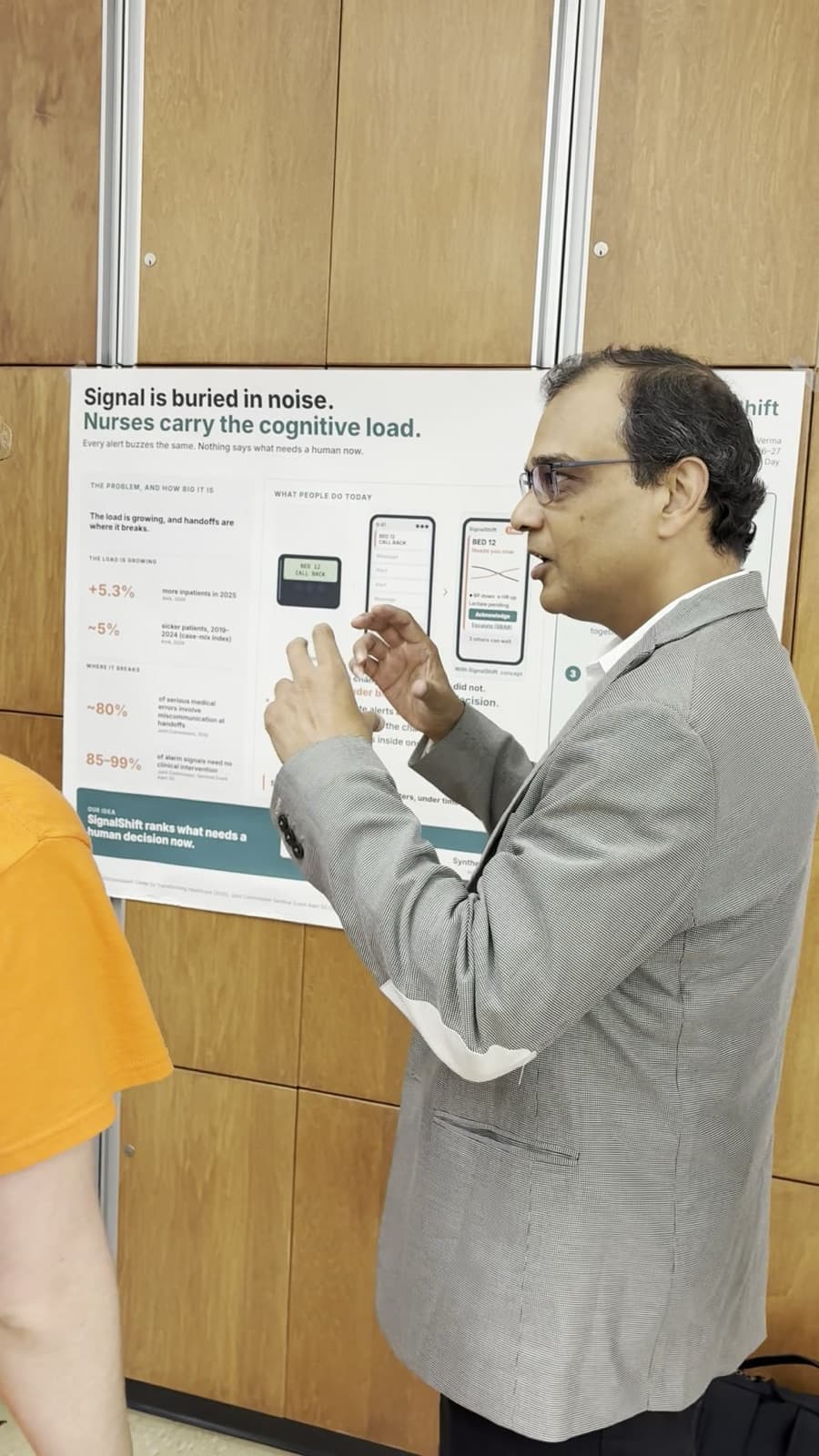
Signal is buried in noise, and nurses carry the cognitive load
About 80 percent of serious medical errors involve miscommunication at handoffs, and somewhere between 85 and 99 percent of alarms need no clinical action. Every alert buzzes the same, so the nurse is left to sort out which one needs a person right now.
Led by Manish Verma, SignalShift reads the handoff, vitals, and pending orders from any EMR, ranks what needs a human decision, and sends one explained item to the right nurse. Meet SignalShift
Weave Health
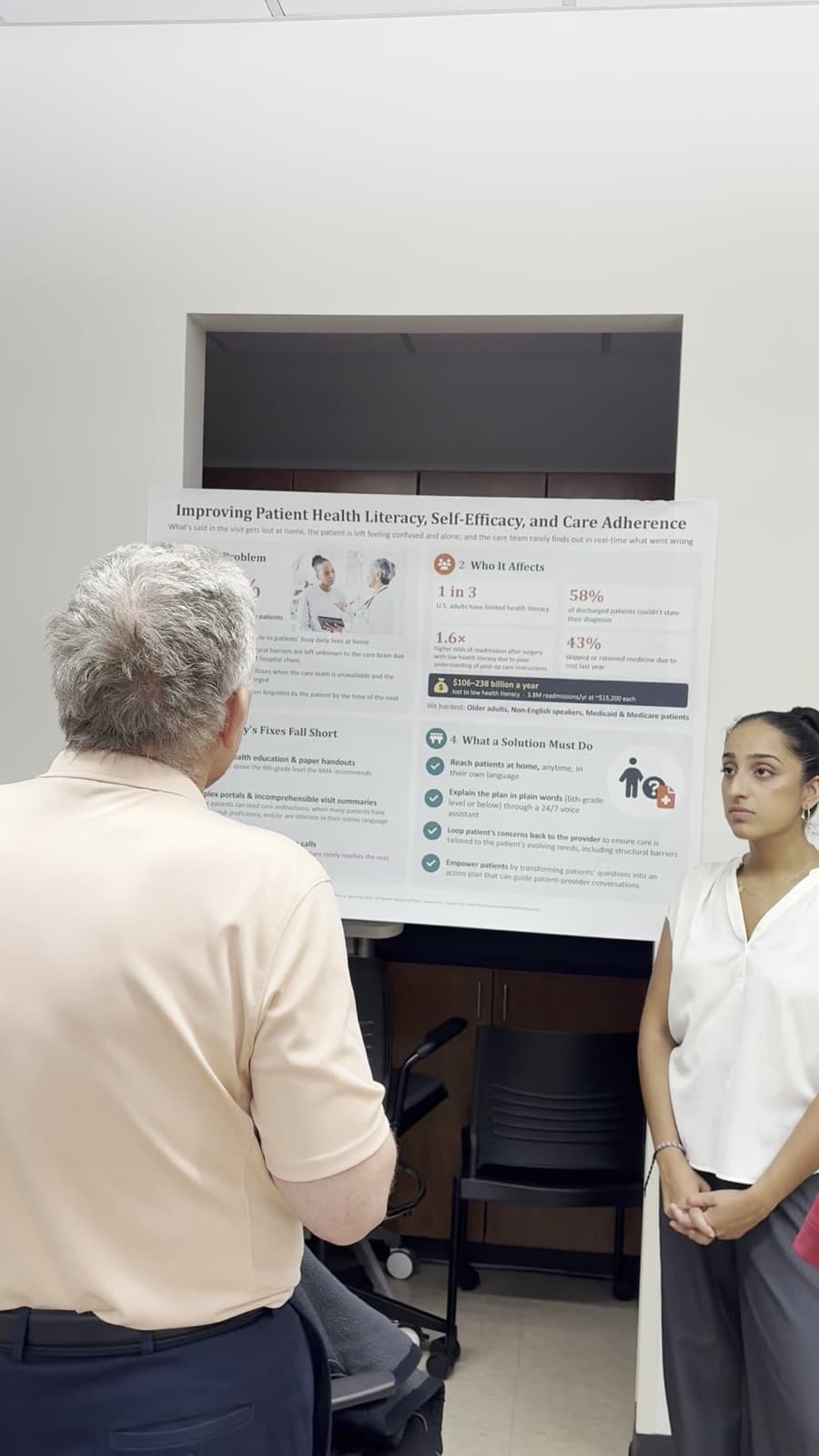
Improving patient health literacy, self-efficacy, and care adherence
One in three US adults struggles to understand health information, and patients forget 40 to 80 percent of what their doctor tells them almost as soon as they leave. Care plans slip, follow-ups get missed, and the care team rarely hears why.
Led by Shreya Ramanathan, Weave Health is a multilingual voice assistant patients can call on anytime to understand their care plan and ask questions. What they ask flows back to the chart as a summary the provider sees before the next visit. Meet Weave Health
What happens now
The nine teams spend the rest of the year turning these problems into products, with mentors, clinicians, and the rest of the chapter behind them. Several are still building their rosters. If one of these problems is one you want to work on, get involved. If you have seen a problem of your own, send it to us.